Skip to content

Song splits written down while the session is fresh, then agreed and signed.

Name the work, add everyone who made it and set the shares until the meter reads a hundred. Send the sheet for signature when everyone already agrees, or open a Consensus Room when they do not. The signed sheet is sealed, and its shares are written back to the release it came from.

Every signed agreement, filed together on one pile.
01

Six kinds of sheet, one for each kind of deal.

A composition sheet settles the song between its writers, a master sheet settles the recording between its collaborators, and a session sheet does both at once, the usual answer to “we made a song together”. There are producer, remix and band sheets too. The kind you pick decides which share columns the sheet has.

  • Composition, master, session, producer, remix and band
  • Up to ten contributors and twelve works on one sheet
  • Started from a release, its contributors are already seated
02

The meter has to read a hundred.

Each contributor has a legal name, an email and the part they played, and the email is who gets asked to sign. The meter shows each column's total as you type, and the sheet cannot be sealed until it reaches a hundred. Only the arithmetic is checked: a total that falls short, a name or email left blank, the same person entered twice.

  • Each column totalled as you type
  • Blank names, blank emails and duplicates caught
  • Uneven shares are never treated as an error
03

When several people have to agree, a room.

A Consensus Room seats every contributor in front of the same numbers. Anyone can propose new shares and say why, and the proposal shows what it costs the others before they answer. When every active seat has approved the same version, the terms can be frozen and the sheet goes out for signature. The person who opened the room can nudge people and keep it moving, but cannot decide it for them.

  • Everyone sees the same sheet and the same history
  • Proposals with a reason, accepted or rejected seat by seat
  • No override for the person who opened it
04

Signed, sealed and written back.

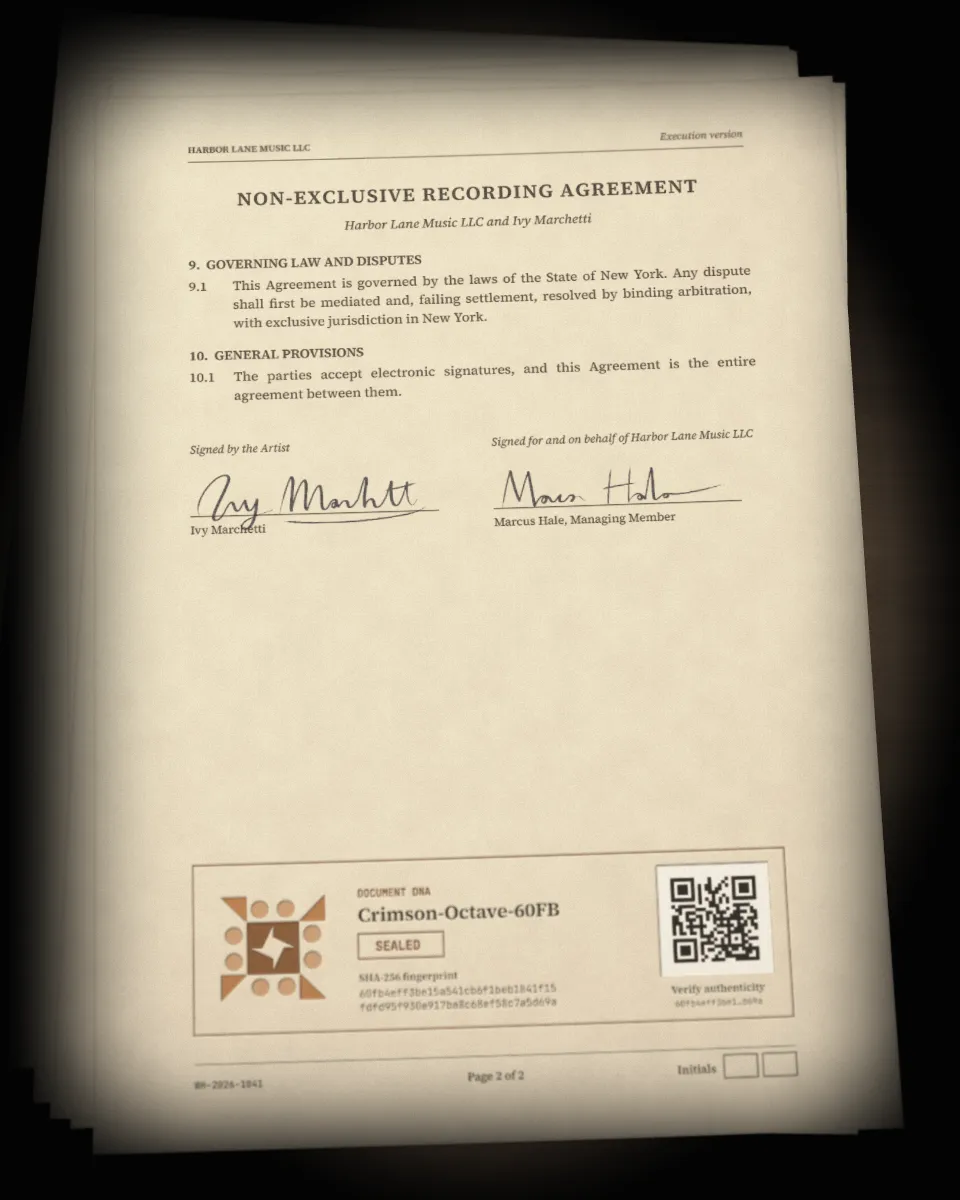
Each contributor signs from their own link, with no account needed. The sealed sheet lands in Contracts, can be verified by anyone who holds it, and is changed later by a new revision rather than quietly edited. A sheet made from a release writes the agreed shares back to it.

  • A link for each signer, and no account needed
  • Sealed with a fingerprint anyone can check
  • Agreed shares written back to the release

What it does not do

  • It does not judge whether a split is fair. It checks that the numbers add up.
  • It does not register the song or pay anyone. The agreed shares are recorded, not paid out.
  • It is not legal advice. A split sheet records what was agreed, and a lawyer still advises on what to agree.

Questions

What is a split sheet?

A written record of who owns what share of a song or a recording, signed by everyone who made it. Written while the session is fresh, it is the document a publisher, a distributor or a collection society asks for later.

Is making a split sheet free?

Yes. Making one is free, and your first split sheet goes out for signature free once your email is confirmed. After that, sending uses the usual signature credits unless your plan includes them.

Do the other contributors need an account to sign?

No. Each one signs from their own link.

How many people can be on one sheet?

Up to ten contributors and twelve works. A bigger project wants more than one sheet, which is usually how the paperwork should read anyway.

Can a signed split sheet be changed?

Not edited. A signed sheet is superseded by a new revision rather than quietly changed.

Start with the work in front of you.