Skip to content

A whole roster's deals, dates and tours, run by one team.

A team workspace keeps a label's or a management company's work apart from anyone's personal files, with a role for each person. Every party has its relationship, the dates that matter land on one calendar, and tours carry their shows, money and paperwork beside the artists they belong to.

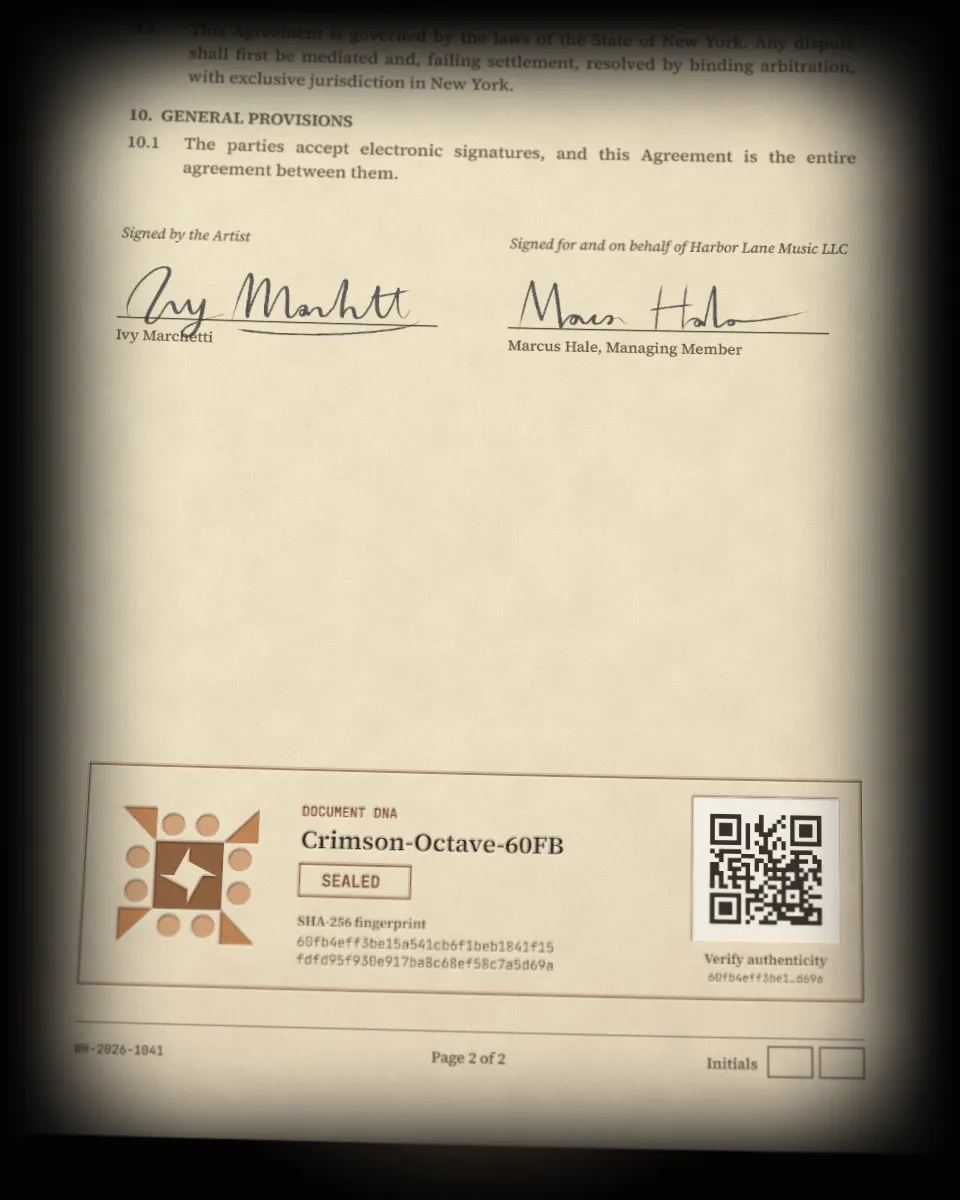
A newly drafted recording agreement's execution page, signed by both parties, with its Document DNA seal, SHA-256 fingerprint and verification QR code.
01

A workspace with a role for everyone.

Seats come with the plan. Each person is an owner, an admin, an editor, a viewer or finance, and the team's work stays apart from anyone's personal documents. Tours are shared across the team, and a reminder can be given to the person who has to act on it.

  • Owner, admin, editor, viewer and finance
  • Team work kept apart from personal files
  • Reminders assigned to a person
02

Every party, and the people there.

Each label, publisher, promoter and collaborator has one relationship: the company as a contract names it, the people you write to, everything filed with them and your notes. Filing a document links it, and never moves or copies it. People searches every contact across the roster at once.

  • Legal details and contacts for each party
  • Documents filed by link, never copied
  • One search across every contact
03

The dates, on one calendar.

Release days and term ends from the Rights Vault, tour dates with their compliance deadlines, and the reminders you set all land on one calendar. Write a reminder in plain words; when a phrase could mean two dates it asks rather than guesses, and the reminder arrives in the app, by email or both.

  • Release days, term ends and tour deadlines
  • Reminders in plain words, kept to their time zone
  • In the app, by email, or both
04

Tours, with the money and the paperwork.

A tour holds its stops and its economics: agent and manager percentages, transport, crew and insurance, and each show's guarantee and costs. Settlement compares what was contracted with what came in, show by show. Share a tour with a promoter, a manager or the public, and each sees only what that audience should.

  • Stops, guarantees and tour-wide costs
  • Settlement show by show: tied, consistent or an exception
  • Tour books as day sheets and a budget spreadsheet, on a paid plan

Worked example

Ivy Marchetti's relationship with Lanternfield Records Limited holds the label's legal details, Hannah Reyes as the lead contact, and the agreement, its amendment and the audited statement. Glasshouse's release day reaches the team's calendar from the Rights Vault, and a reminder for the next statement lands beside it.

Watch this deal on the home page

What it does not do

  • It does not read deadlines out of your contracts. The calendar holds the release days, terms and tours you have recorded, and the reminders you set.
  • A reminder is a nudge, not a legal safeguard.
  • Tour compliance guidance is not legal or tax advice.

Questions

Can labels and managers separate client records?

Yes. A team workspace keeps the roster's work apart from anyone's personal documents, and each party has its own relationship holding its legal details, contacts, filed documents and notes.

Are contract deadlines tracked automatically?

Not by reading the contract. Release days and term ends come from the Rights Vault, tour dates and compliance deadlines from Tour Planner, and anything else is a reminder you set in plain words.

What tour operations are supported?

Tours and their stops and economics, promoter offer sheets read from a PDF or a photo, show-by-show settlement, share links for a promoter, a manager or the public, and tour books as day sheets and a budget spreadsheet on a paid plan.

What does the other side of a deal see?

Only what you share with them: a fully executed contract, read-only, with its parties and its seal. Never your notes, your reviews or your other deals.

Start with the contract you are about to sign.